The village is named after a man: Abou Said Khalaf ibn Yahia al-Tamimi al-Baji, a Sufi teacher who came here from Béja in the 13th century, settled on the headland and spent the rest of his life teaching and — according to tradition — protecting sailors in the gulf below. He died in 1231 and was buried where he had lived.
His zaouia and tomb still sit at the heart of the village, and the white square minaret beside them is the point every street bends towards. Everything you walk through today — the lanes, the café, the shops — grew up around the pilgrimage to that tomb.
- Area: In the village
- 13th-century Sufi shrine
- The village square
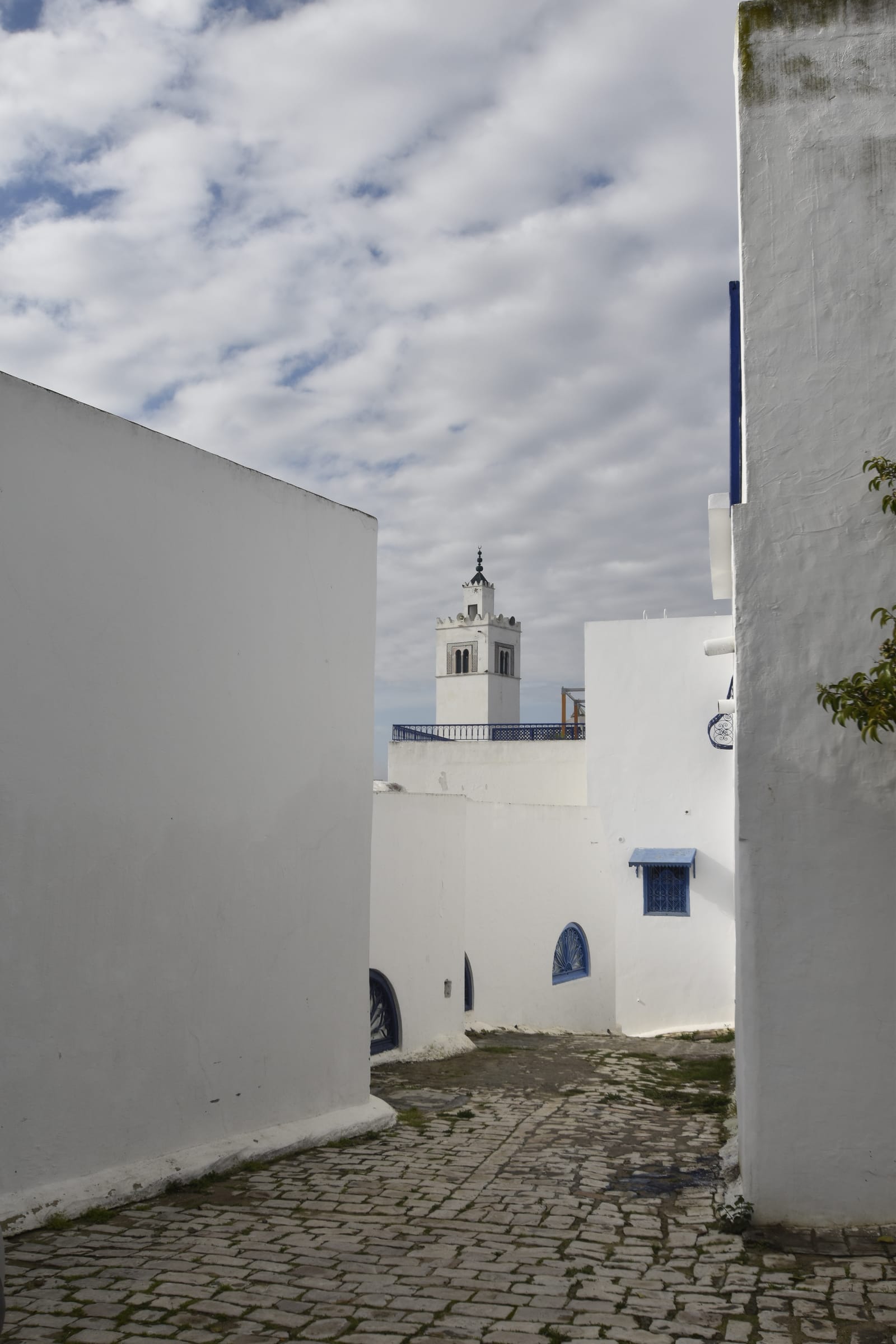
- The white square minaret
Top things to do at The Mosque & Mausoleum
See the minaret from the square
The square, whitewashed minaret is a Maghrebi form rather than the pencil-thin Ottoman kind, and against a blue sky it is the defining shape of the village skyline.
Understand the kharja
Each summer the village holds the kharja, a procession in honour of the saint with horses, drums and banners winding through the streets. If your visit coincides with it, drop everything else.
Walk the square at dusk
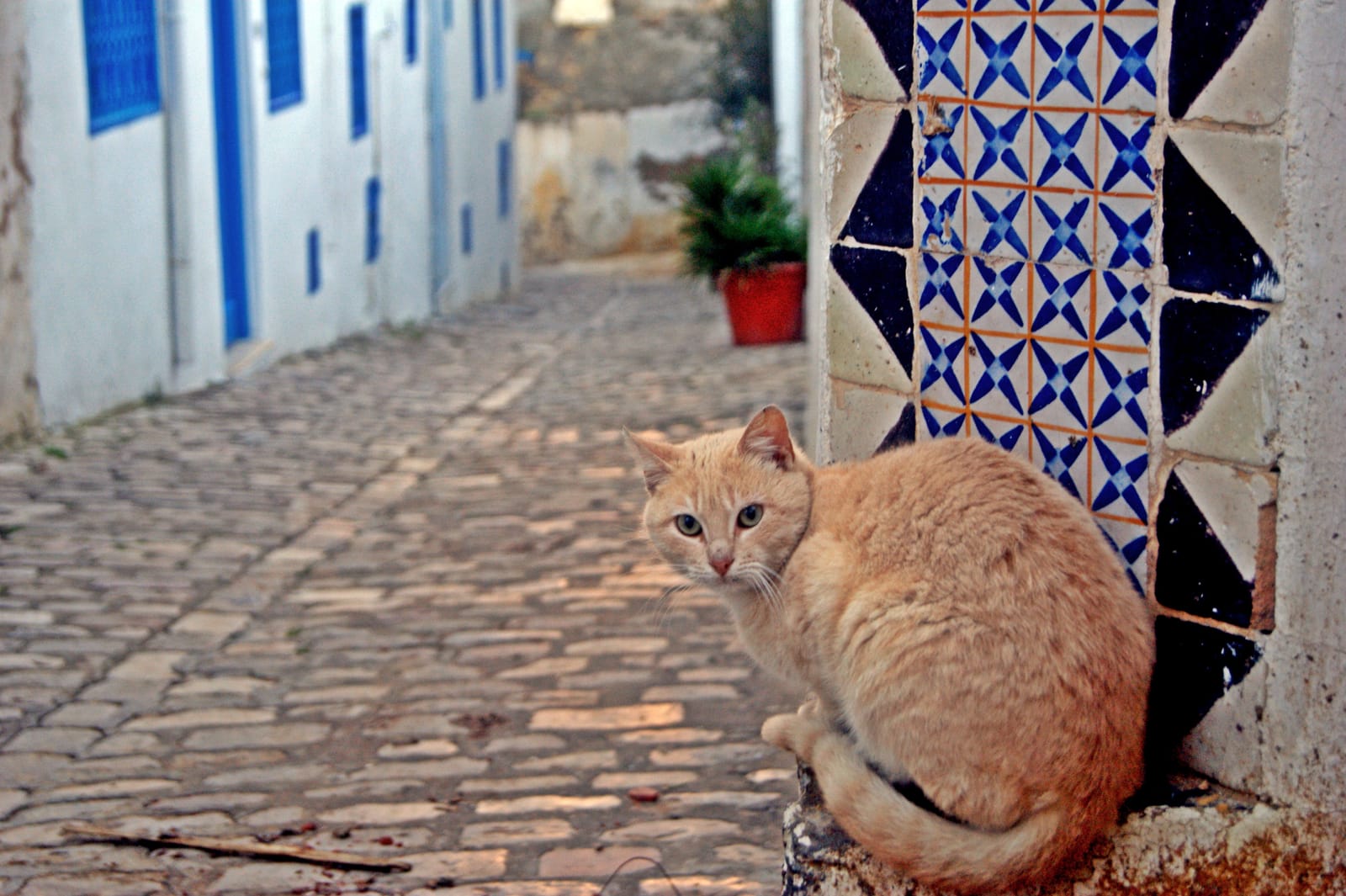
After the tour groups leave, the square becomes what it actually is: the social centre of a small Tunisian town, with families out, cats everywhere and the call to prayer coming off the minaret.
How to get to The Mosque & Mausoleum
- At the top of Rue Habib Thameur, next to the Café des Nattes.
- Ten minutes uphill on foot from the TGM station.
Insider tips
- The mosque and the shrine are active places of worship and are generally not open to non-Muslim visitors. Photograph the exterior, and do so discreetly if people are praying.
- Cover shoulders and knees around the square — it costs nothing and is noticed.
- Friday midday is the busiest prayer time; the square is quieter before and after.
The Mosque & Mausoleum FAQs
Frequently asked questions
Can tourists go inside the mosque?
No. Like most working mosques in Tunisia, the mosque and the saint’s zaouia in Sidi Bou Said are reserved for worshippers. The Zitouna Mosque in Tunis does admit visitors to its courtyard, if you would like to see inside one.
Who was Sidi Bou Said?
Abou Said al-Baji (died 1231), a Sufi scholar from Béja who settled on this headland. "Sidi" is an honorific, roughly "my lord". The village took his name and his tomb remains its spiritual centre.
When is the kharja festival?
The procession is traditionally held in summer, but the exact dates move from year to year. Ask at your hotel when you arrive — it is a local rather than a heavily advertised event.