Best time to visit Sidi Bou Said
Short answer: late April to early June, and mid-September to the end of October. Warm enough to swim, cool enough to walk uphill on cobbles, and the light on the whitewash is at its best.
| Month | High | Low | Sea | Rain | Crowds |
|---|---|---|---|---|---|
| January | 17°C | 8°C | 15°C | Frequent | Very quiet |
| February | 17°C | 8°C | 15°C | Frequent | Very quiet |
| March | 19°C | 10°C | 15°C | Occasional | Building |
| April | 22°C | 12°C | 17°C | Occasional | Busy |
| May | 26°C | 15°C | 19°C | Rare | Busy |
| June | 30°C | 19°C | 23°C | Rare | Busy |
| July | 34°C | 22°C | 26°C | Rare | Peak |
| August | 34°C | 23°C | 27°C | Rare | Peak |
| September | 31°C | 21°C | 26°C | Occasional | Busy |
| October | 26°C | 17°C | 23°C | Occasional | Busy |
| November | 21°C | 13°C | 20°C | Frequent | Quiet |
| December | 18°C | 9°C | 17°C | Frequent | Very quiet |
Typical long-term averages for the Gulf of Tunis. Individual years vary.
Season by season
Spring (March–May) — the best of the year
Bougainvillea and jasmine come out, the hills behind the coast turn green, and daytime temperatures sit in the low twenties. The village is busy but not overwhelmed, and everything is open. Book accommodation early: these are the weeks the few village rooms sell out first.
Summer (June–August) — hot, and crowded at midday
Thirty-four degrees and no shade on the main street. The sea is at its warmest, the evenings are wonderful, and the village is at its most crowded between eleven and four. If you come in summer, come at eight in the morning or after six in the evening, and swim in between.
Autumn (September–October) — the other sweet spot
Arguably better than spring: the sea is still 26°C in September, the crowds thin from mid-month, and October is warm, clear and half-empty. The single best month for a first visit is probably October.
Winter (November–February) — quiet and occasionally wet
Mild rather than cold — daytime highs of 17–21°C — but this is when the rain falls, and the wind off the gulf makes the terraces chilly. Some smaller places close or reduce hours. In exchange you get the lanes almost to yourself, and the light after a storm is extraordinary.
Things worth timing your trip around
Octobre Musical (October)
The Ennejma Ezzahra palace runs a festival of Arab and Mediterranean music each autumn. A concert in that music room is the best evening in the village.
The kharja (summer)
The procession in honour of Sidi Bou Said, the saint the village is named for, with horses, drums and banners through the lanes. Dates move; ask locally.
Ramadan
The dates shift by about eleven days each year. Cafés and restaurants adjust their hours, the village is subdued during the day and lively after sunset, and the evening atmosphere is memorable. Check the dates for your year and ask your hotel about breakfast.
Cruise-ship days
When a ship calls at La Goulette the village fills between eleven and three. It is not predictable months ahead, but if you are staying nearby you can simply go early or late that day.
For photographers
- Morning, 8–10am: empty streets, clean light on the white walls, no tour groups.
- Late afternoon: the terraces, the marina and the gulf all face the right way.
- Blue hour: about twenty minutes after sunset, when the lanterns come on and the whitewash goes lilac. The single best light of the day.
- Avoid 12–3pm in summer entirely: harsh overhead sun, blown highlights on the whitewash, and the crowds at their worst.
Timing FAQs
Frequently asked questions
What is the best month to visit Sidi Bou Said?
May and October are the two strongest months: warm but not hot, sea warm enough to swim in, everything open, and manageable crowds. April and September are nearly as good.
Is Sidi Bou Said worth visiting in winter?
Yes, if you do not mind some rain. Daytime highs are 17–21°C, the village is almost empty, and hotel prices are at their lowest. Bring a jacket for the terraces — the wind off the gulf is sharp.
How hot does it get in summer?
Daytime highs around 34°C in July and August, with very little shade in the village. Sea temperature reaches 26–27°C, which is the compensation.
What time of day is best?
Before ten in the morning or after five in the afternoon. The middle of the day is both the hottest and the most crowded, especially when a cruise ship is in port.
Should I avoid Ramadan?
Not necessarily — evenings during Ramadan are lively and welcoming — but daytime hours at cafés and restaurants change, and some places close. If you want the full café experience, either check the dates or plan around the evening.
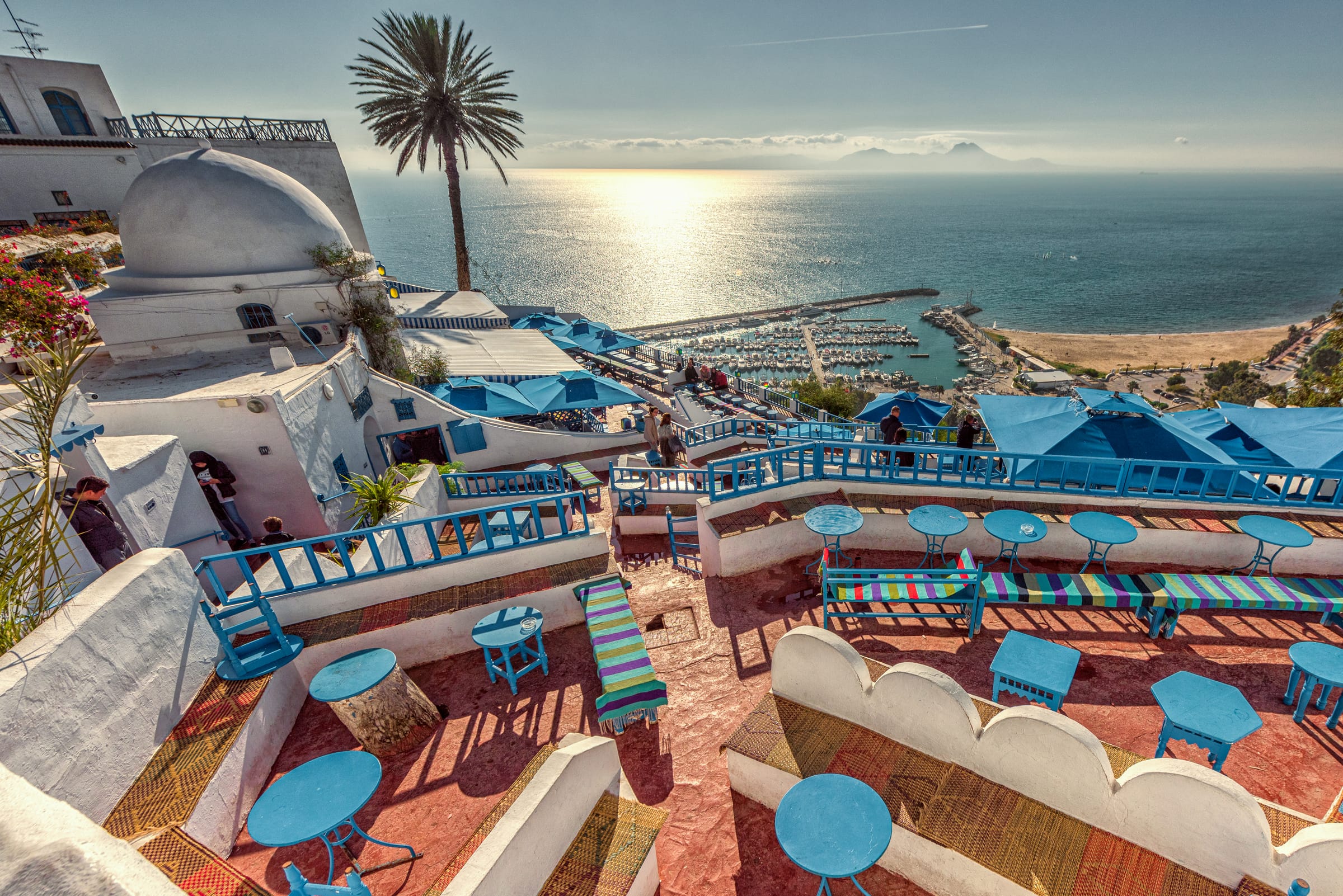
Make the blue-and-white village the highlight of your Tunisia trip
Cobalt doors, jasmine-scented alleys, mint tea above the Mediterranean and the ruins of Carthage twenty minutes away. Compare guided tours, day trips and boat cruises and book in a couple of taps.