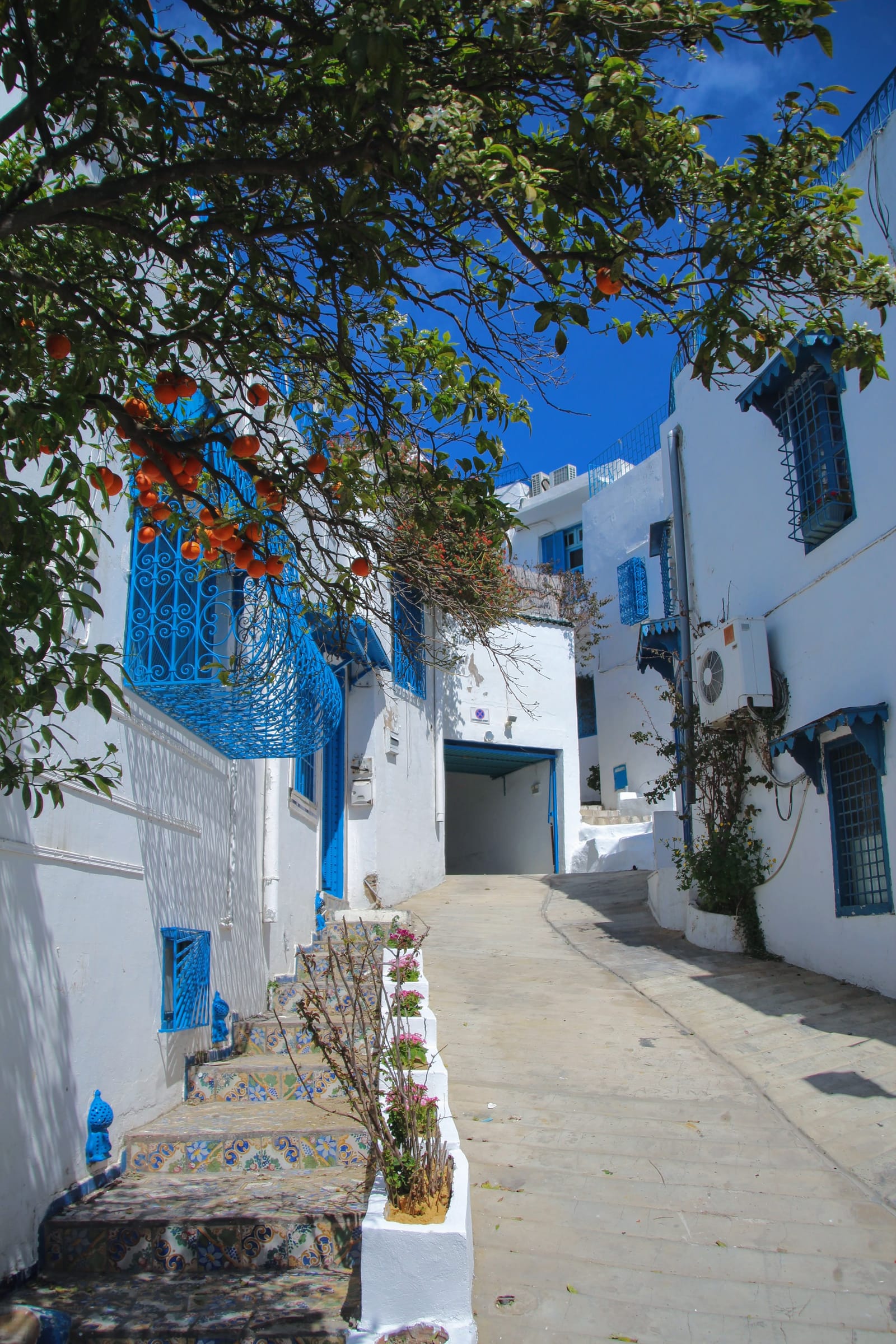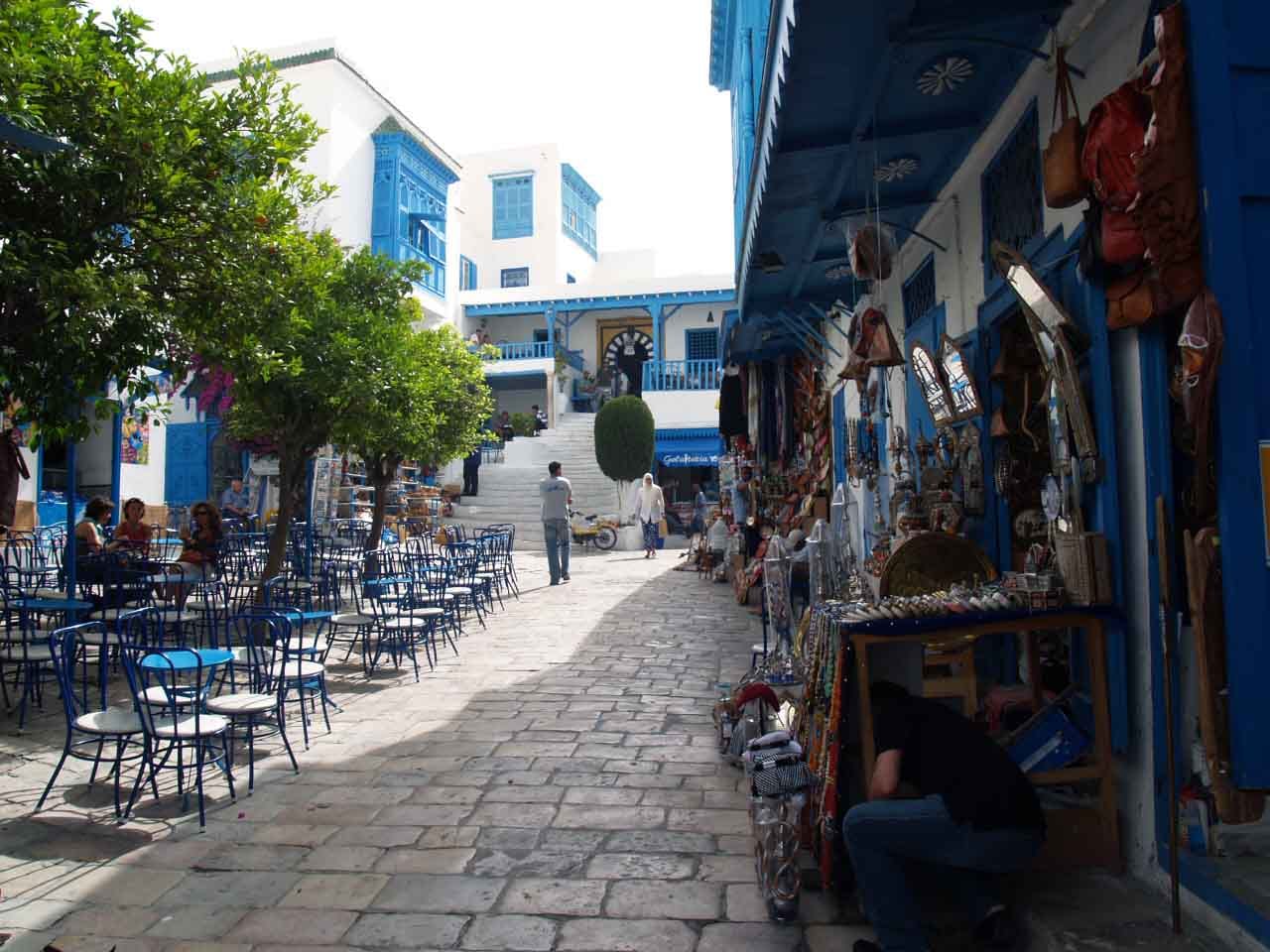
Sidi Bou Said is famous for exactly two colours, and the rule is not an accident. In 1915 the French-born painter and musicologist Rodolphe d’Erlanger, who had just built his palace on the slope below, persuaded the authorities to protect the village: whitewashed walls, and joinery in one single shade of blue. More than a century later the code still holds, which is why the place photographs like a film set rather than a town.
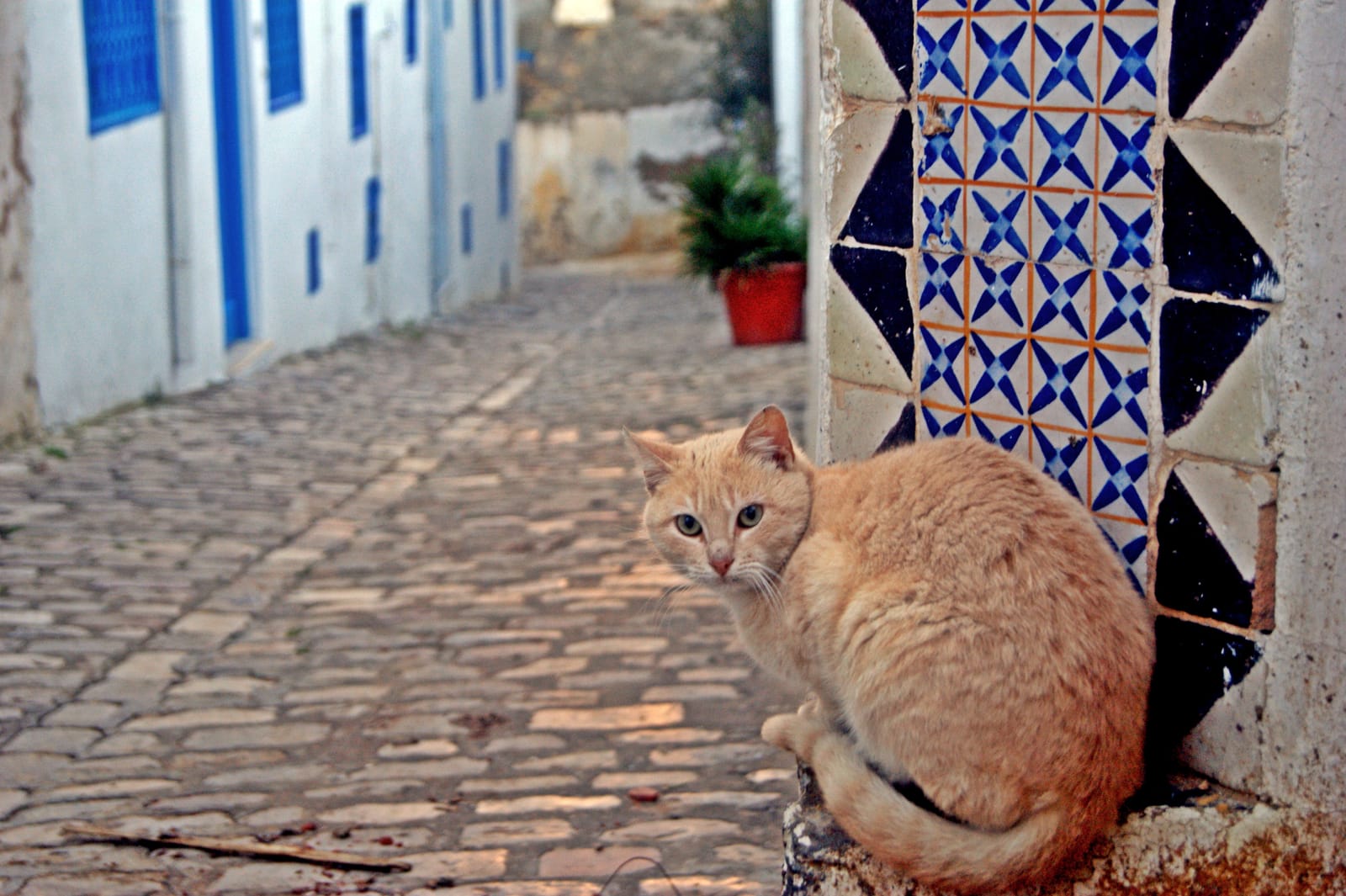
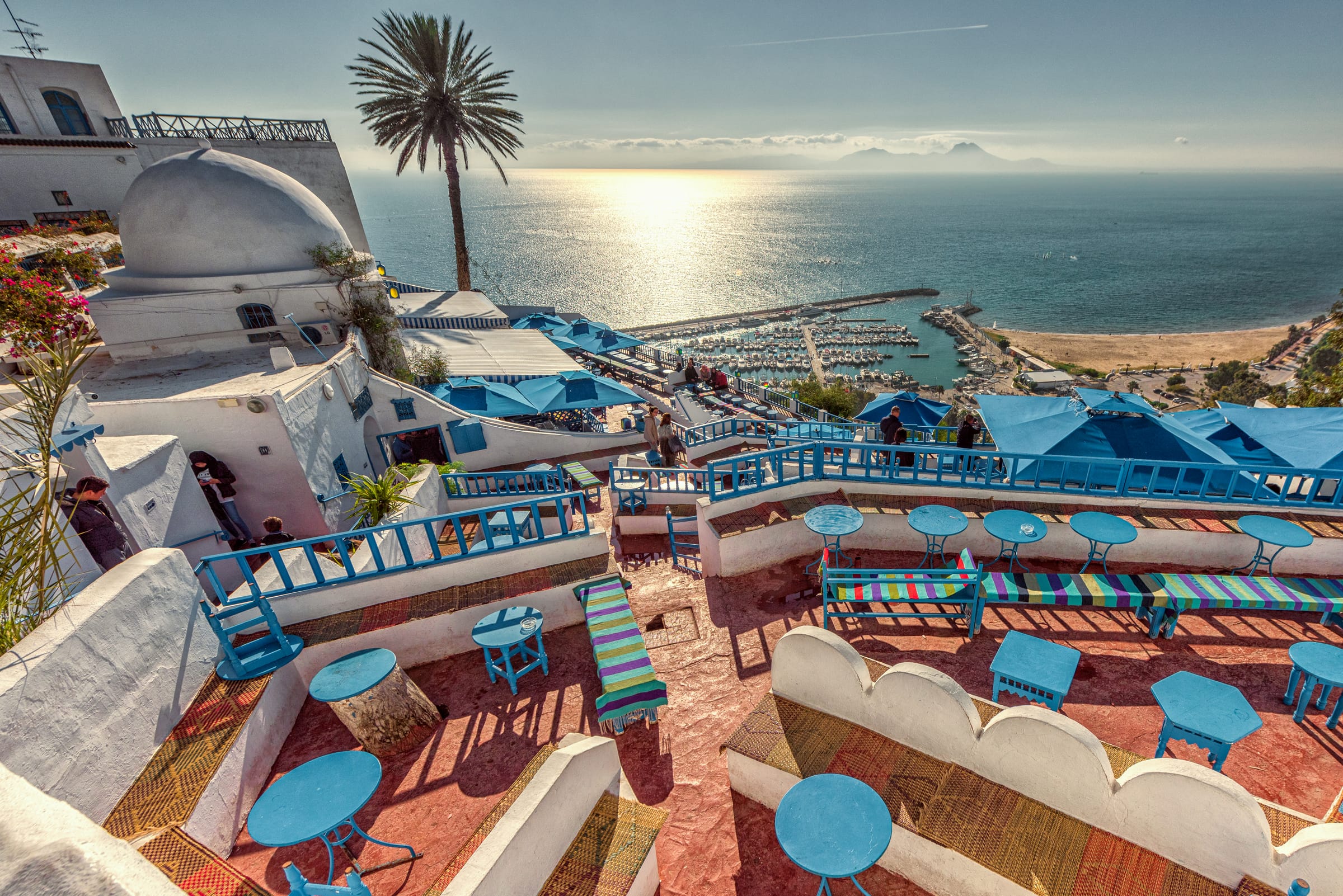
The spine of it all is Rue Habib Thameur, the cobbled main street that climbs from the roundabout at the bottom to the clifftop cafés at the top. Ten minutes end to end if you march; two hours if you behave normally, stopping at every studded door, every mashrabiya window and every cat asleep on a blue step.
- Area: In the village
- Rue Habib Thameur
- Studded doors of Nabeul blue
- Artisan and ceramic shops
Top things to do at The Blue Doors & Cobbled Lanes
Read the doors
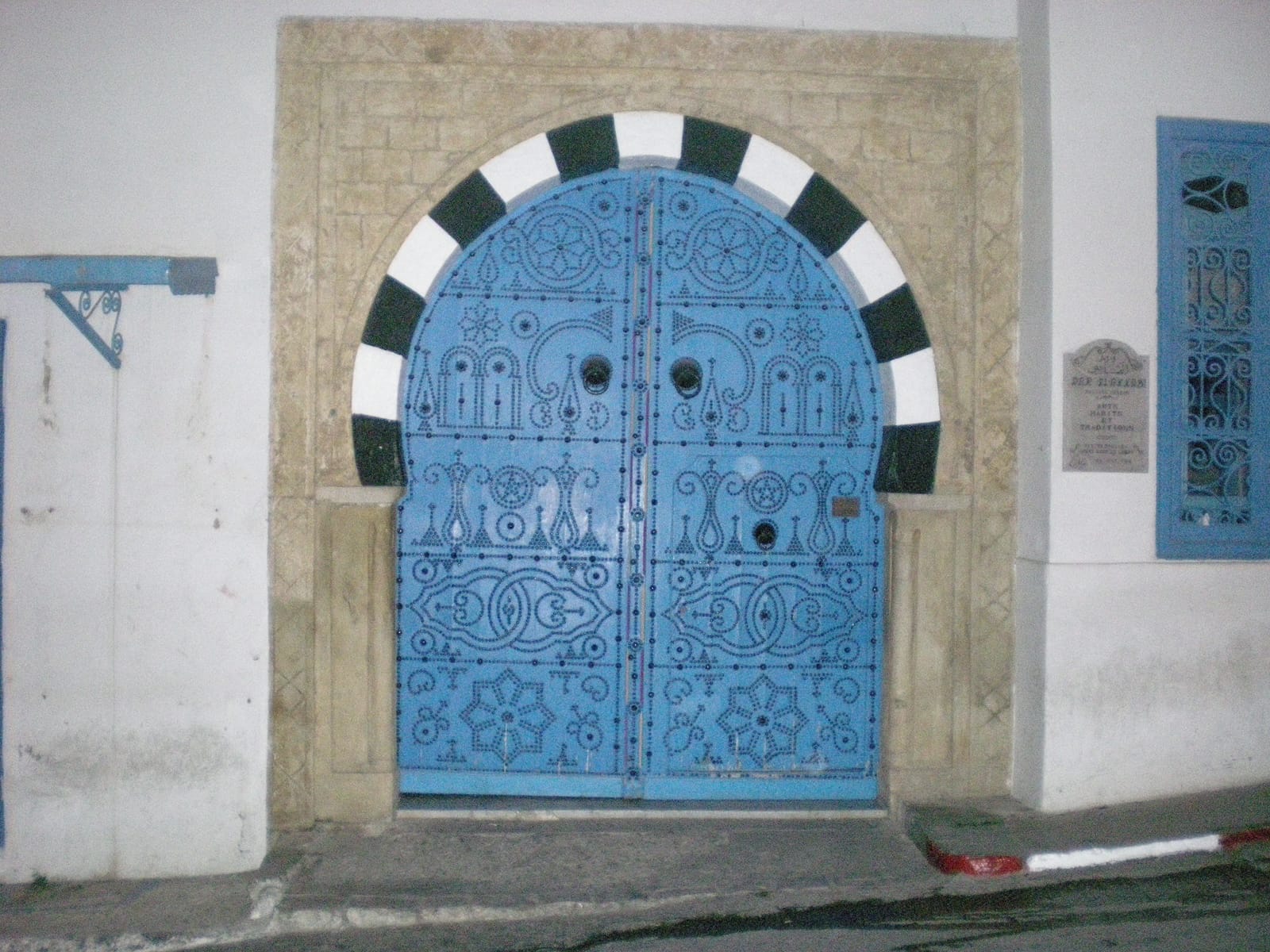
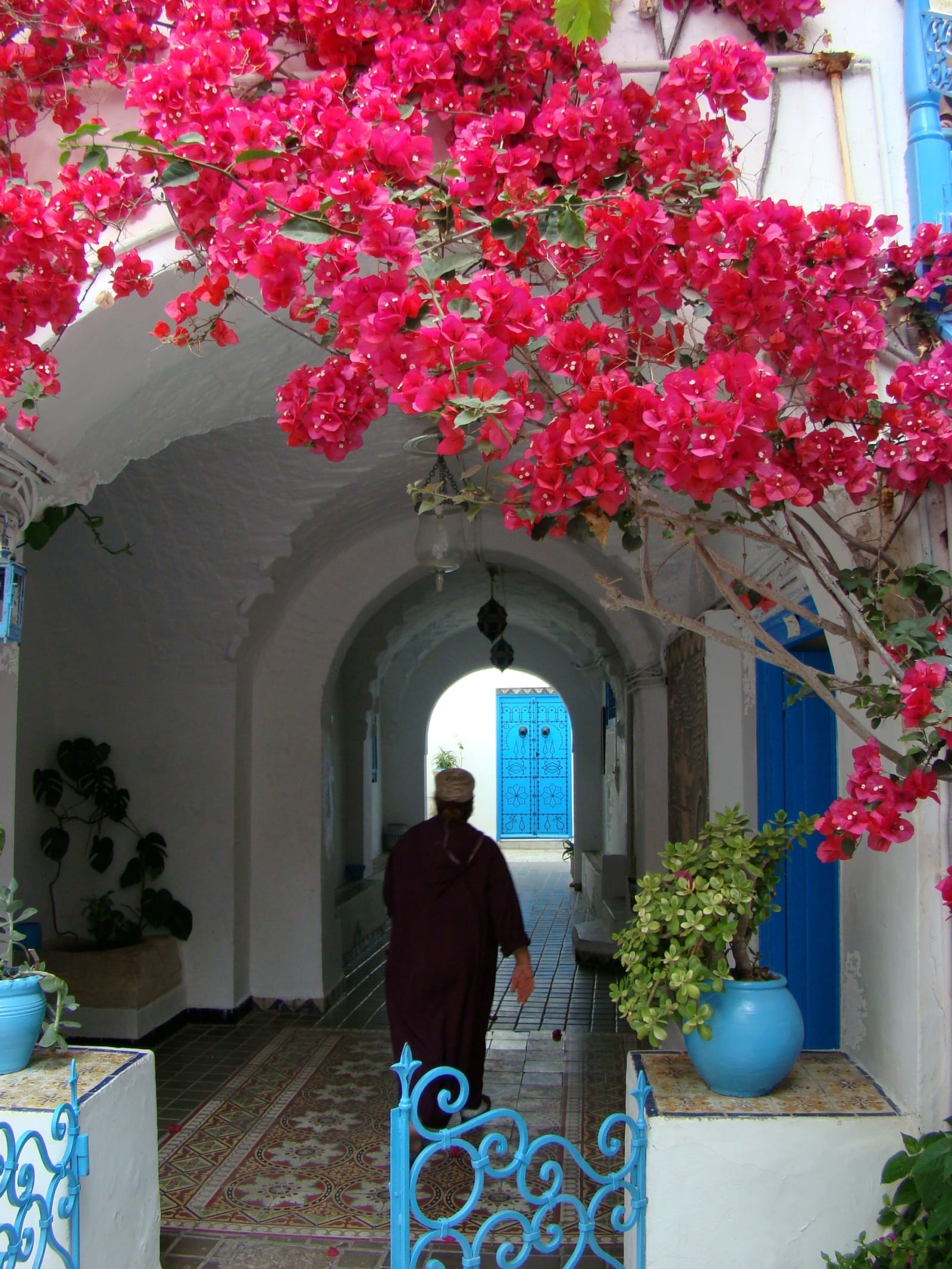
The black studs hammered into the big arched doors are not decoration for its own sake. The patterns — fish, crescents, the hand of Fatima, geometric bands — were protective symbols and, in their day, quiet statements about the family inside. The finest examples are on the upper half of Rue Habib Thameur and on the side lanes running off to the right.
Look up at the mashrabiya
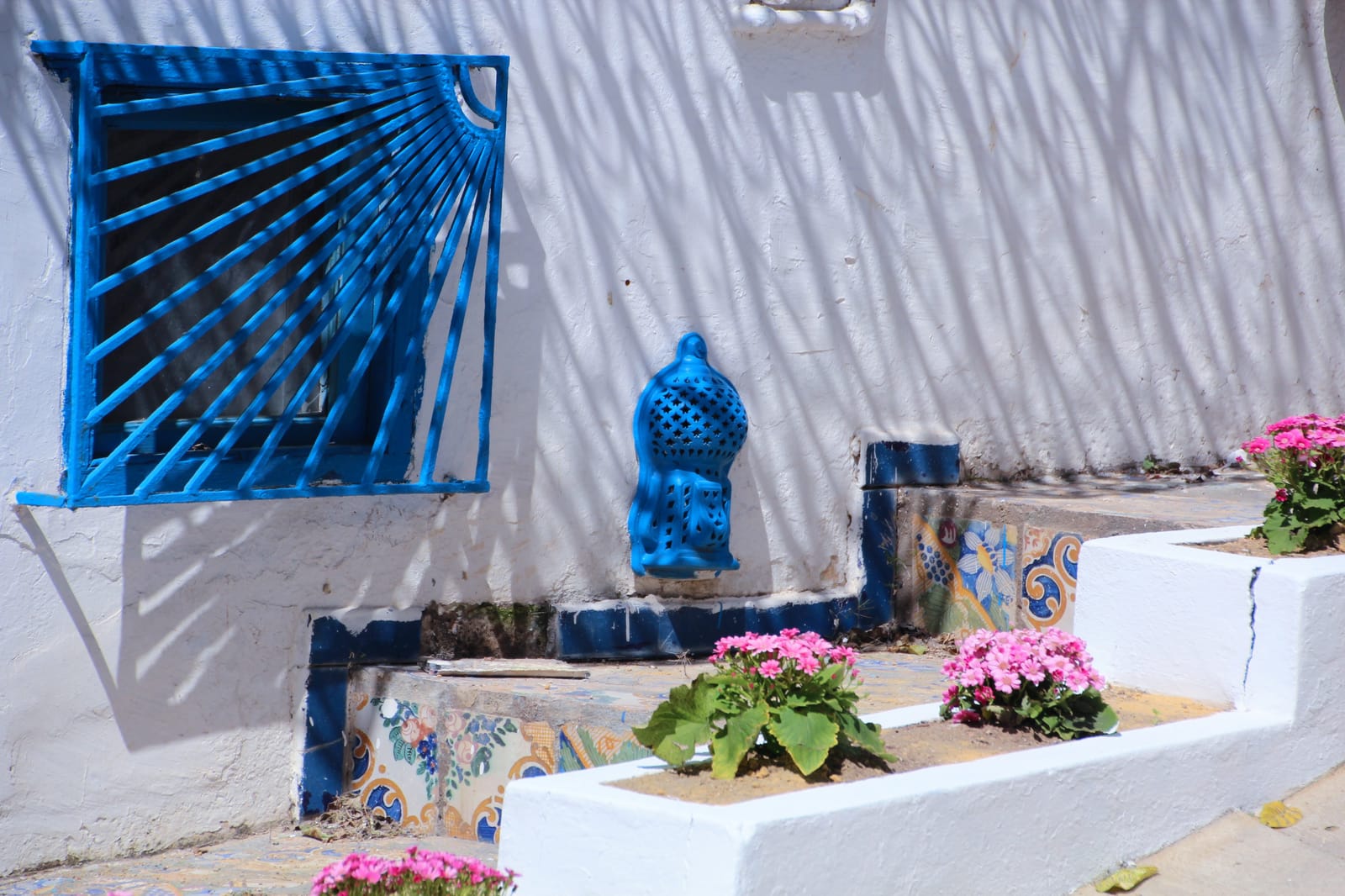
The bulging blue window cages are pure medieval Andalusia, brought across by families expelled from Spain. They let the women of the house see the street without being seen, and they are the single most photographed detail in Tunisia.
Shop the artisan lanes
Ceramics from Nabeul, birdcages, olive wood, filigree silver and rugs. Prices are tourist prices and haggling is expected — start around half and settle near two-thirds. The workshops on the side streets are better value than the stalls on the main drag.
Walk it twice
Once at nine in the morning, when the street is empty and the light is clean, and once after six, when the day trippers have gone and the whitewash turns apricot. They are two different villages.
How to get to The Blue Doors & Cobbled Lanes
- The main street starts at the roundabout by the TGM station car park — from the station it is a five-minute walk uphill, signposted.
- It is cobbled and genuinely steep in places. Wear something with grip, and note that the climb is hard going with a pushchair or a wheelchair.
Insider tips
- Photographers: mornings for the street, late afternoon for the terraces and the gulf.
- The village is busiest between 11am and 4pm, especially when a cruise ship is in at La Goulette.
- Shopkeepers may invite you up to a roof terrace "for the view, no charge" — the view is usually excellent and a small tip or a purchase is the polite close.
- Dress is relaxed but this is a working village with a shrine at its centre; covered shoulders and knees are appreciated away from the beach.
The Blue Doors & Cobbled Lanes FAQs
Frequently asked questions
Why is Sidi Bou Said blue and white?
The colour scheme was made law in 1915 at the urging of Baron Rodolphe d’Erlanger, who had built the Ennejma Ezzahra palace here. The blue is a traditional Tunisian joinery colour, often called Nabeul blue after the pottery town, and its use is still regulated today.
How long do I need in the village?
Two to three hours covers the main street, a café and a viewpoint. Half a day lets you add Dar El Annabi or the Ennejma Ezzahra palace. A full day if you want to walk down to the marina and swim.
Is it free to walk around?
Yes. The streets, the square and the viewpoints cost nothing. Only the museum houses, the palace and the cafés charge.