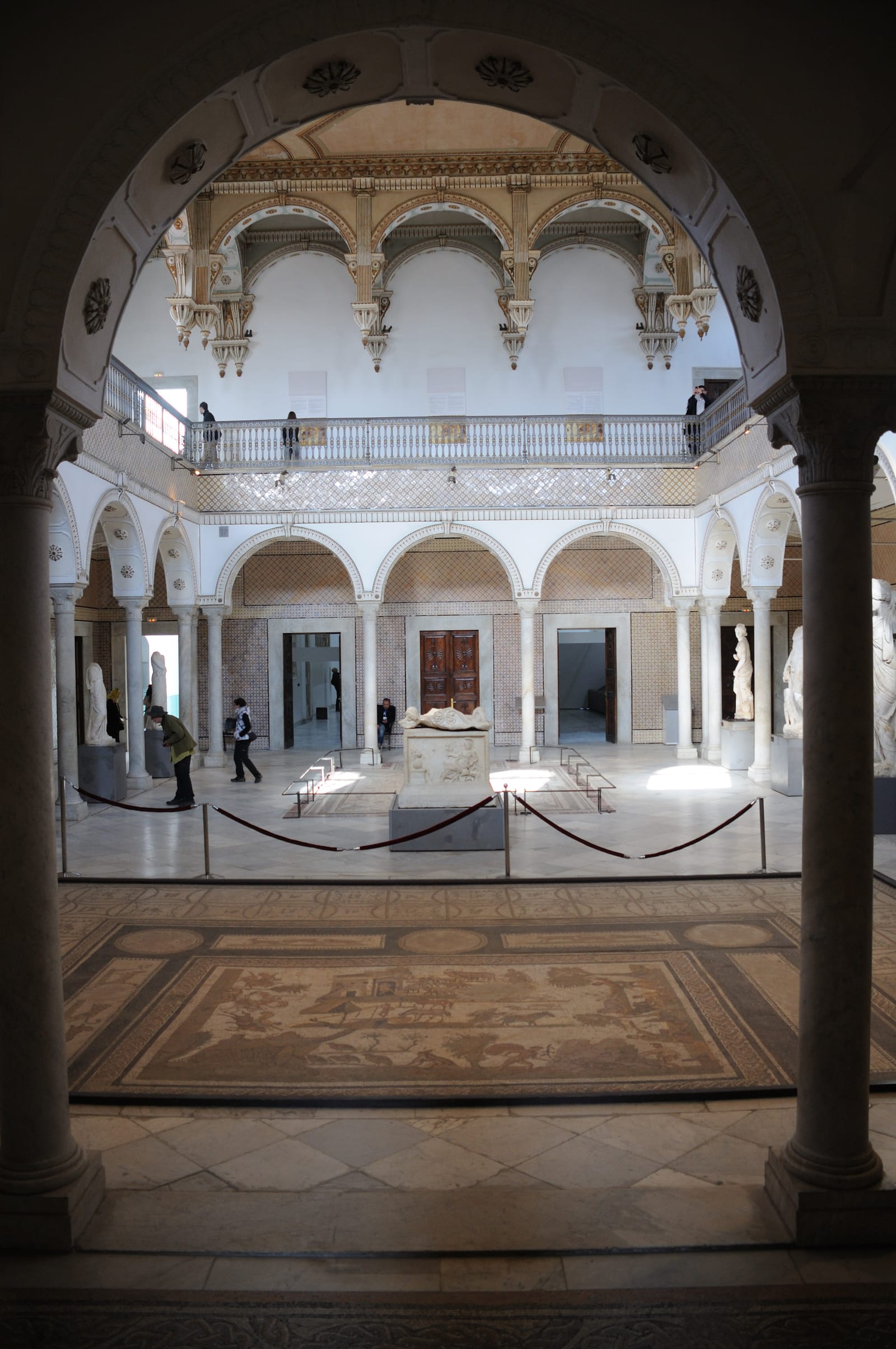
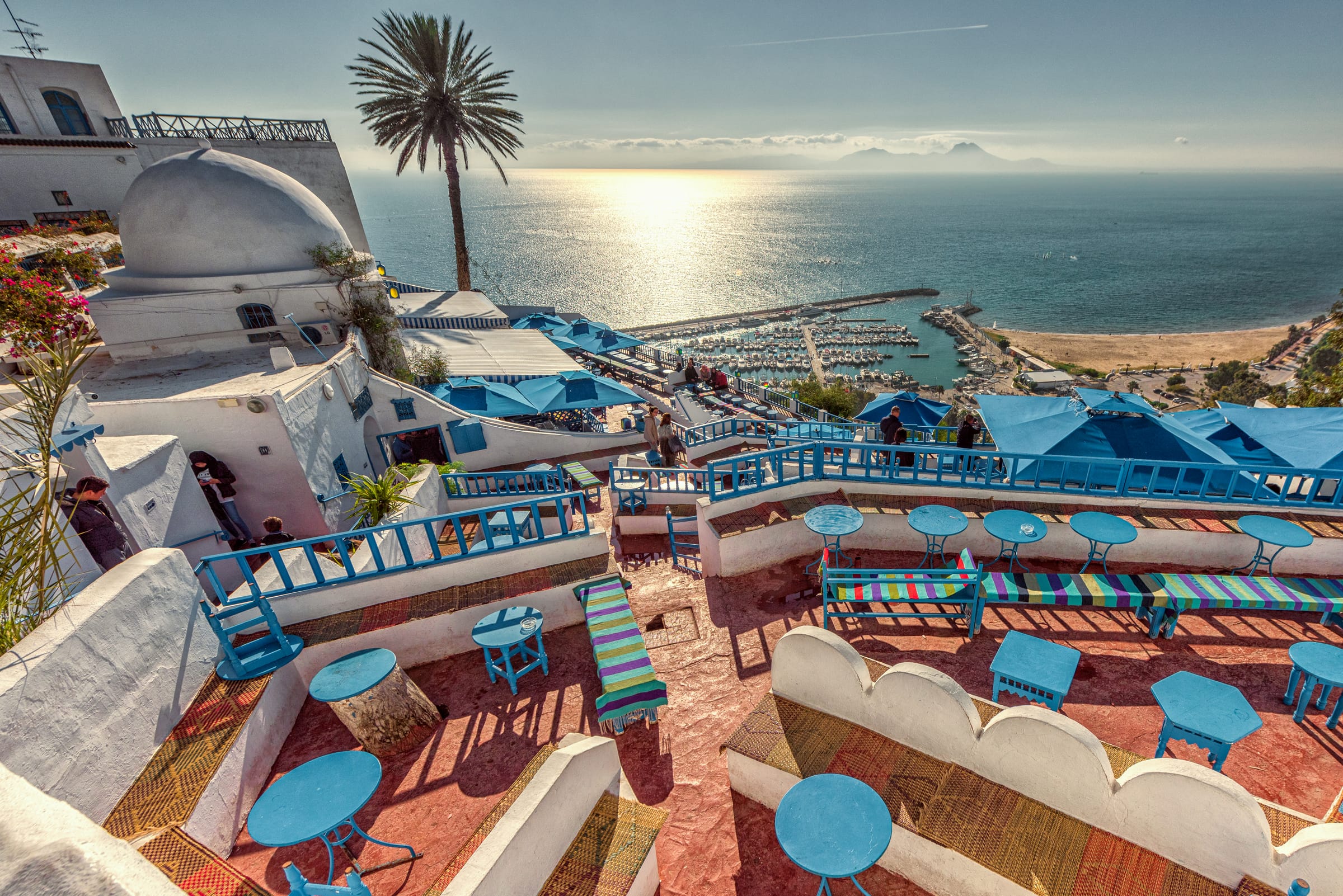
If you want to understand why Sidi Bou Said looks the way it does, this is the building to visit. Rodolphe d’Erlanger — painter, baron, and the first European to write a serious six-volume study of Arab music — built Ennejma Ezzahra ("star of Venus") on the lower slope between 1912 and 1922, in a deliberate revival of Arab-Andalusian architecture at a moment when the colonial fashion was for European villas.
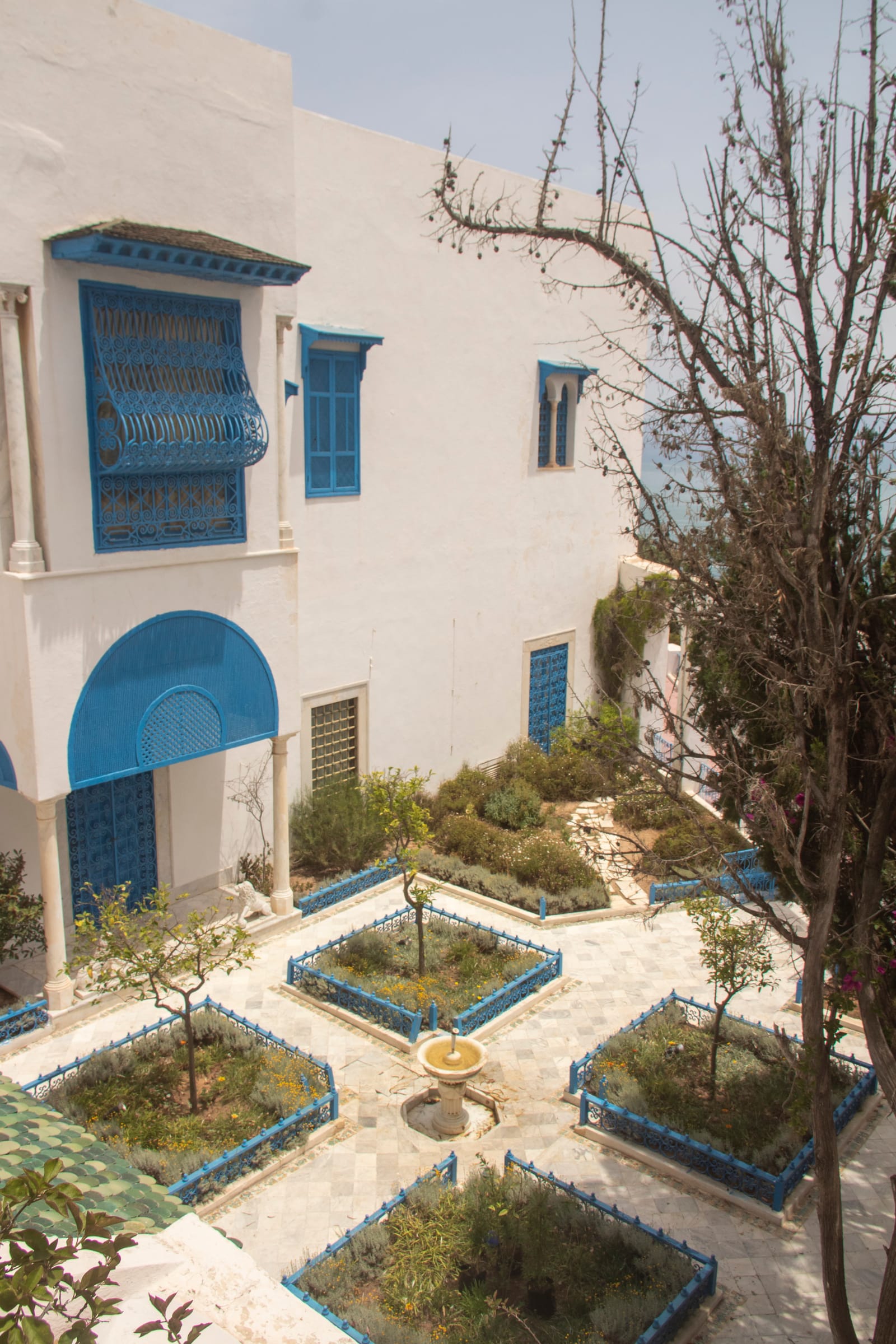
He then used his influence to get the village’s blue-and-white palette written into law. The palace itself is dazzling: marble colonnades, Persian-style garden terraces stepping down towards the sea, carved plaster, painted cedar ceilings and a music room built for the concerts he hosted. It is now the Centre for Arab and Mediterranean Music, with a collection of historic instruments and a concert programme of its own.
- Area: Palaces & museum houses
- Andalusian gardens and basins
- Arab music instrument collection
- Concerts and the Octobre Musical
Top things to do at Ennejma Ezzahra Palace
Walk the garden terraces
The gardens step down the hillside in a series of planted terraces and long water basins, framed by cypress and olive, with the Mediterranean at the end of every axis. Go slowly; this is the best part.
See the instrument collection
Ouds, rebabs, qanuns, percussion — the working collection of a man who spent his life documenting Arab music, displayed in the rooms he designed for it.
Look at the craftsmanship
D’Erlanger hired the best Tunisian, Moroccan and Andalusian craftsmen he could find. The carved plaster, the marble, the painted ceilings and the tiled kbou alcoves are the reason architects still make the trip.
Catch a concert
The centre programmes Arab and Mediterranean music through the year, and hosts the Octobre Musical festival each autumn. A concert in that music room is the single best thing you can do in Sidi Bou Said after dark.
How to get to Ennejma Ezzahra Palace
- On the lower slope of the village, on Rue 2 Mars 1934, about ten minutes downhill from the main square.
- From the TGM station it is a short, mostly level walk — considerably easier than the climb to the top of the village.
Insider tips
- Opening hours are museum hours and it usually closes one day a week; check before making a special trip.
- Photography is generally fine in the gardens; interior rules can vary, so ask at the desk.
- Pair it with a walk down to the marina afterwards — both are on the lower half of the hill.
- If you are at all interested in music, the gift desk sells recordings you will not find elsewhere.
Ennejma Ezzahra Palace FAQs
Frequently asked questions
What is Ennejma Ezzahra?
A palace built between 1912 and 1922 by Baron Rodolphe d’Erlanger in Arab-Andalusian style, now Tunisia’s Centre for Arab and Mediterranean Music. It is open to visitors and hosts concerts.
Is it the same as the Baron d’Erlanger palace?
Yes — the two names refer to the same building, and locals use them interchangeably.
How long should I allow?
An hour to ninety minutes for the house and gardens at a relaxed pace. Longer if there is a concert or a temporary exhibition on.