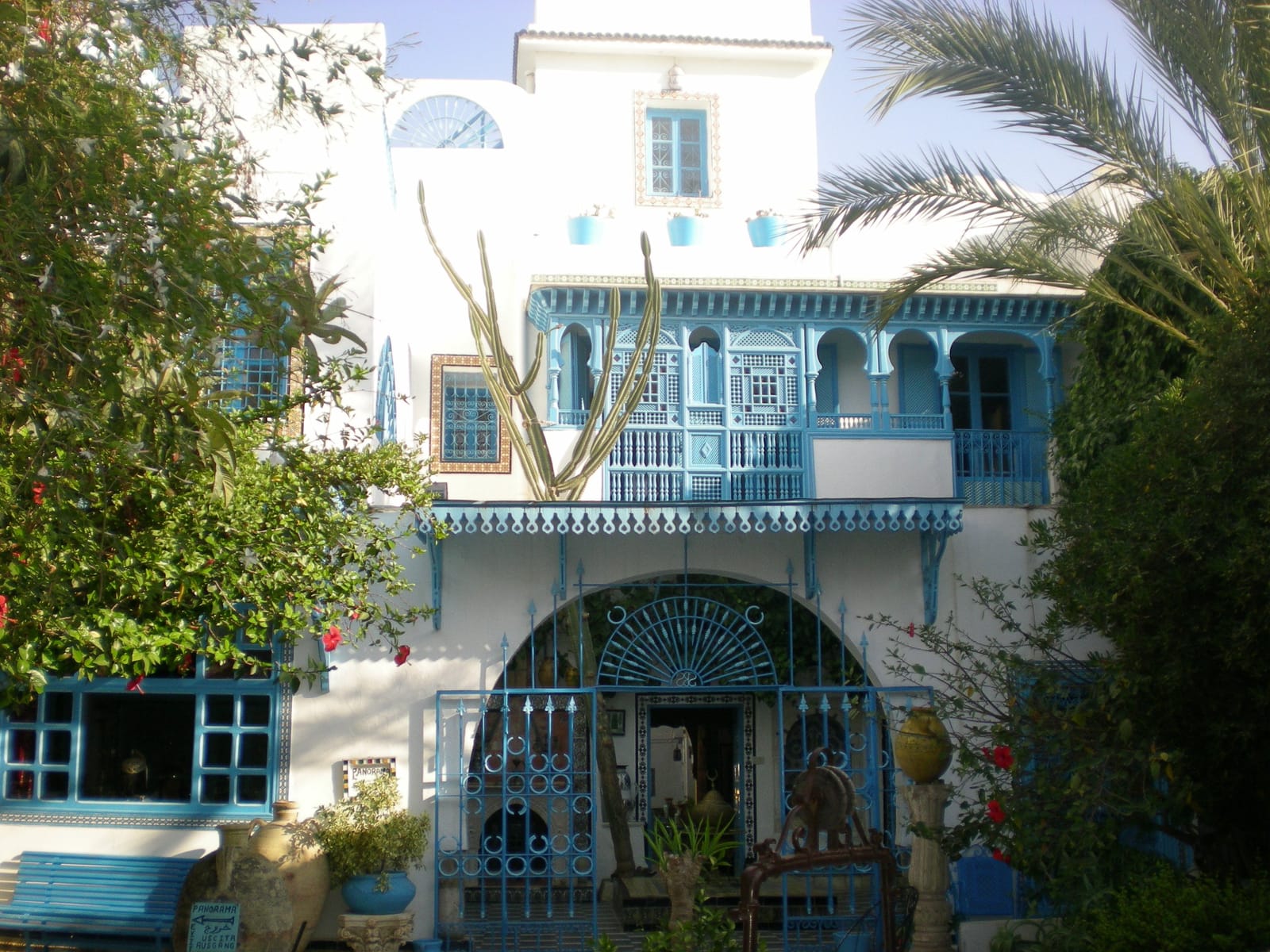
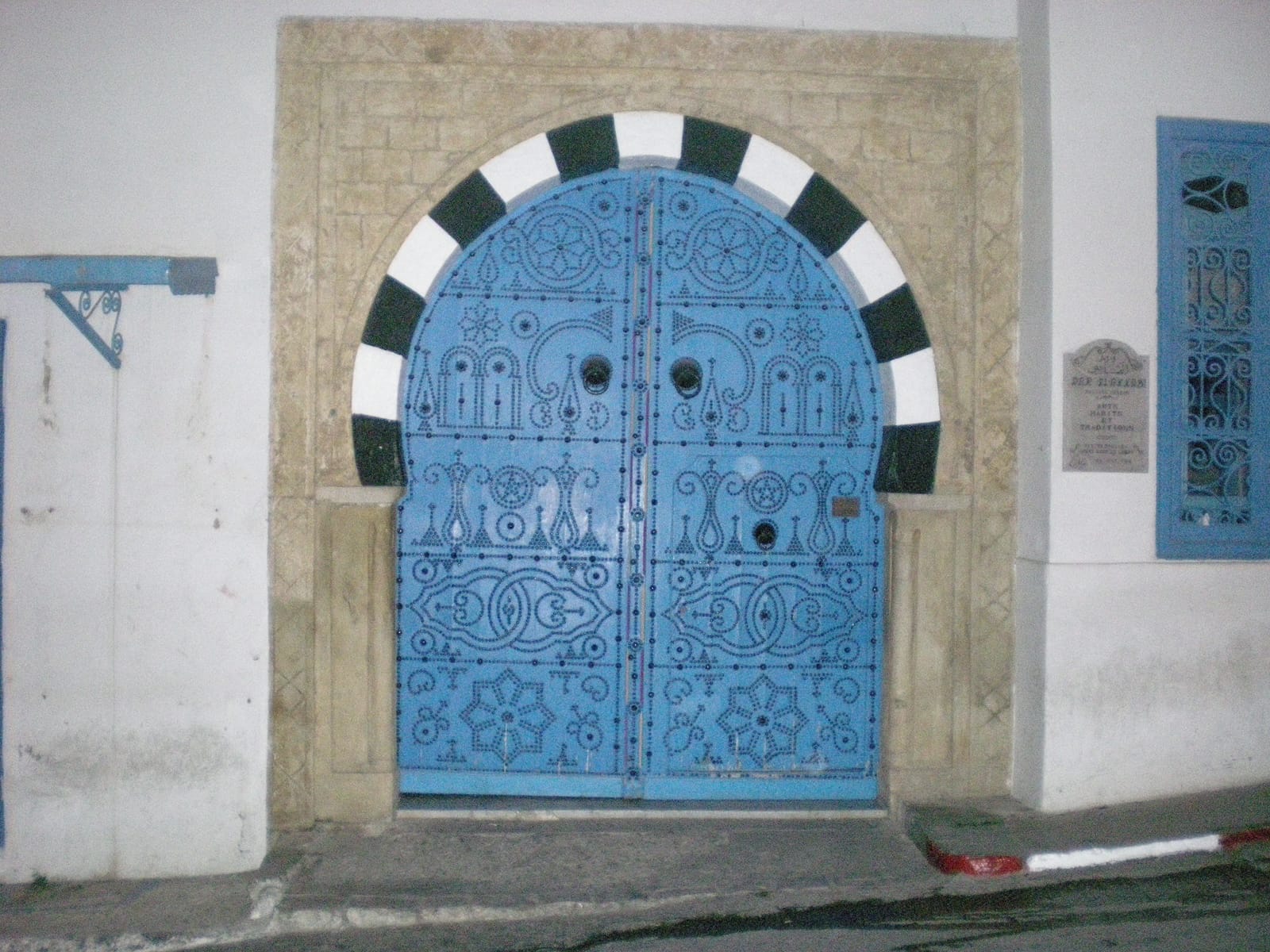
Most visitors photograph the doors from outside and never see what is behind them. Dar El Annabi solves that. It is an 18th-century family house, still owned by the family whose name it carries, opened to the public as a museum of how a well-off Sidi Bou Said household actually lived.
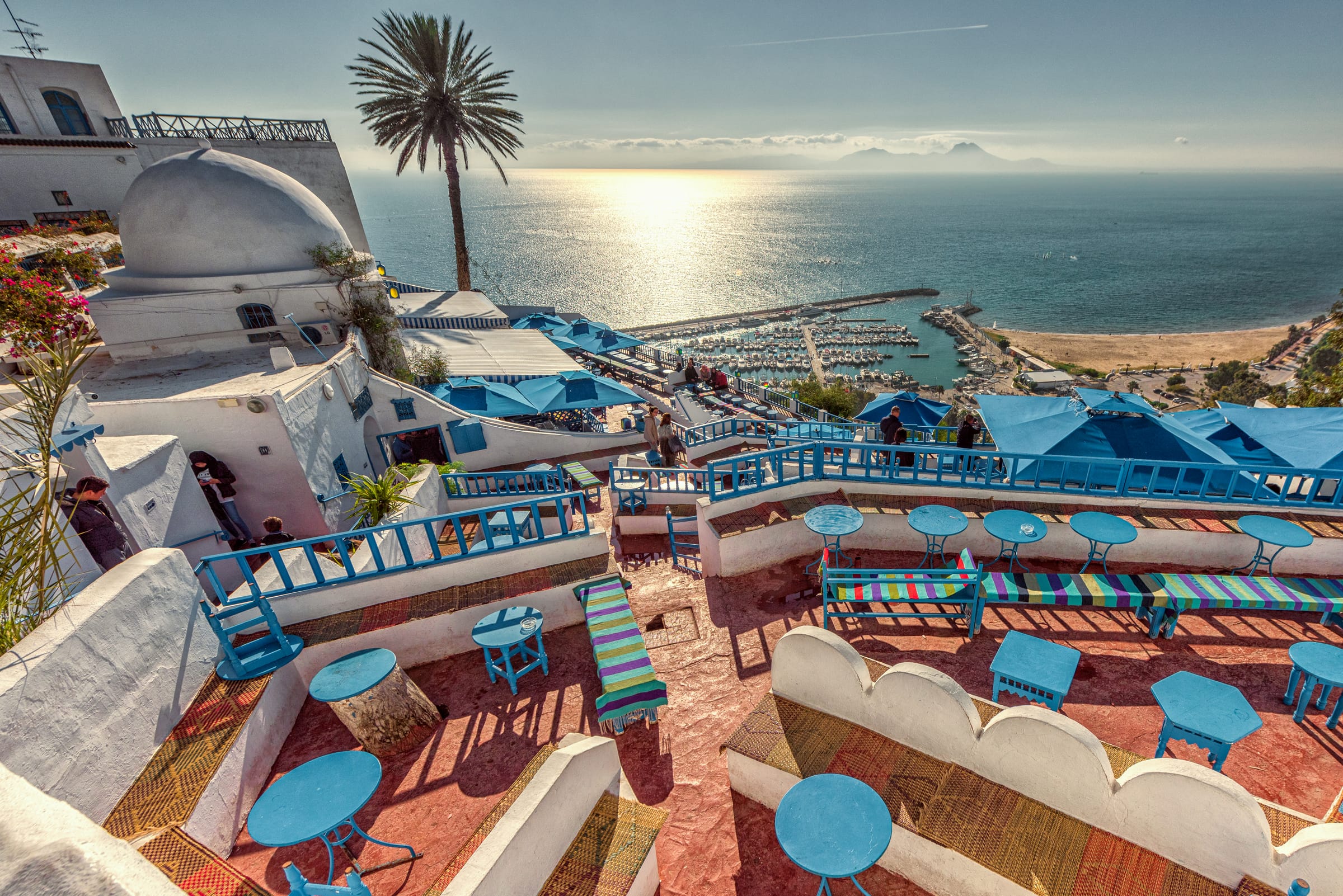
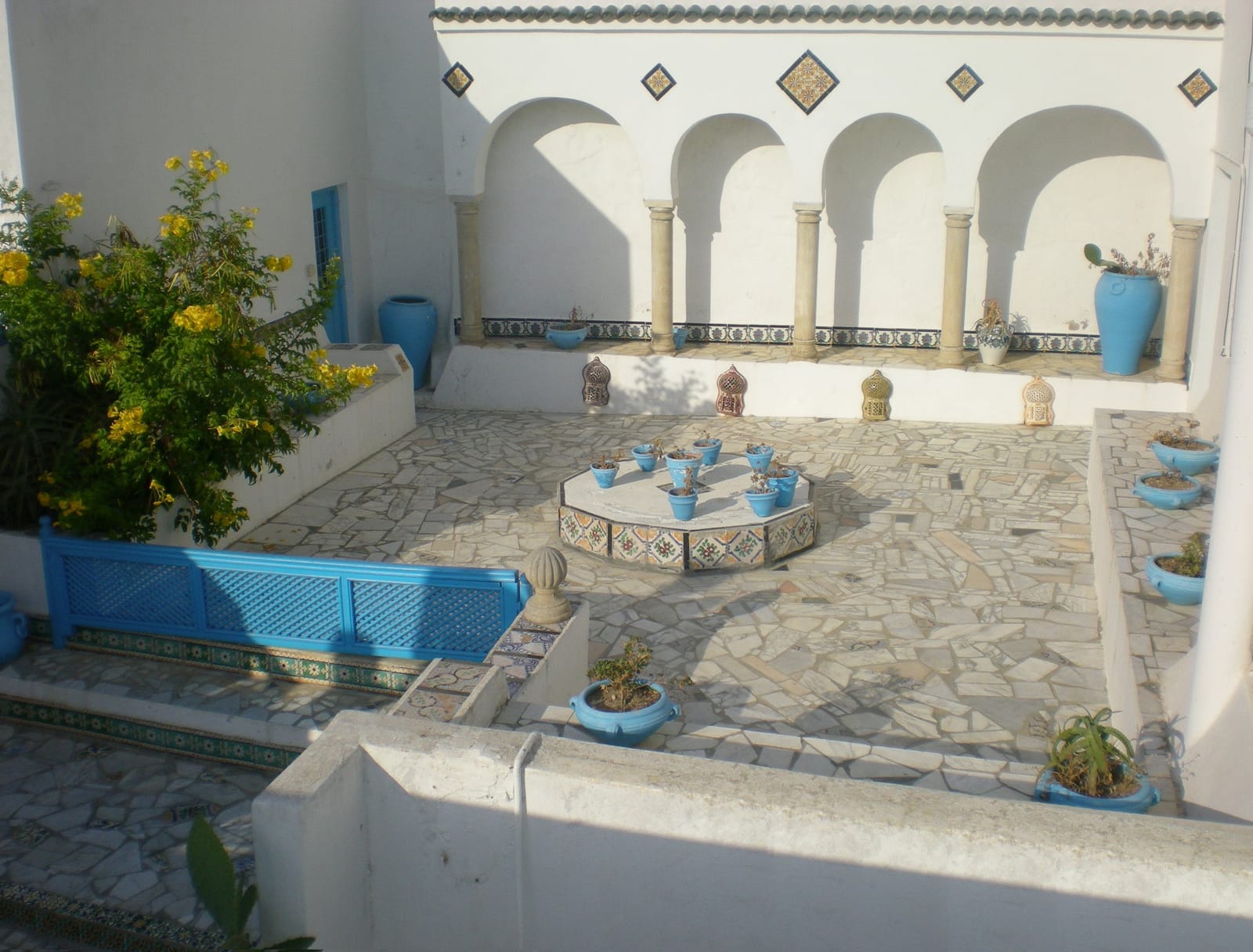
You get tiled courtyards, a marble fountain, a Quranic school room, a kitchen, bedrooms laid out for a wedding — and, at the top, a roof terrace that gives you the village rooftops, the minaret and the whole blue arc of the Gulf of Tunis for the price of a coffee.
- Area: Palaces & museum houses
- Painted patios and tilework
- Costumed period rooms
- Rooftop terrace view
Top things to do at Dar El Annabi
Walk the courtyards
The house is built inward around its patios, the standard plan for an Arab townhouse: blank to the street, open to the sky inside. The tilework, the stucco and the painted ceilings are all original in feel even where restored.
Read the room settings
Costumed mannequins stage everyday scenes — a wedding preparation, a circumcision party, tea being served, the kuttab where children learned the Quran. It sounds hokey and it works: it is the clearest picture of pre-modern village life you will get anywhere on the headland.
Go straight up to the roof
The terrace is the reason to come. Rooftops, minaret, sea — and far fewer people than the clifftop cafés, because most visitors do not realise it is there.
How to get to Dar El Annabi
- On Rue Habib Thameur, roughly two-thirds of the way up the main street on the left-hand side as you climb.
- Seven or eight minutes uphill from the TGM station.
Insider tips
- A small admission fee is charged at the door, cash only, and it is modest.
- Allow thirty to forty minutes; an hour if you linger on the roof.
- There are stairs throughout and no lift, so it is not step-free.
- Combine it with the Ennejma Ezzahra palace lower down the hill for a proper architecture half day.
Dar El Annabi FAQs
Frequently asked questions
Is Dar El Annabi worth visiting?
Yes, and especially if you want to see inside a traditional house rather than only photograph doors from the street. The rooftop view alone justifies the ticket, and the visit is short enough to slot into any itinerary.
How much does it cost?
A small cash entry fee, typically a few dinars. Bring change — there is no card machine and the nearest ATM is at the bottom of the hill.
How long does a visit take?
Thirty to forty minutes is normal. It is self-guided, with explanation panels in Arabic, French and English.