Twenty minutes down the coast, on the next headland, lies the city that fought Rome for the Mediterranean and lost. Carthage was founded by Phoenicians from Tyre in the 9th century BC, destroyed by Rome in 146 BC, rebuilt by Rome as the second city of the western empire, and finally wrecked by the Arab conquest. What survives is spread across a leafy suburb in half a dozen separate sites, all covered by one ticket and all within a few stops of the TGM line.
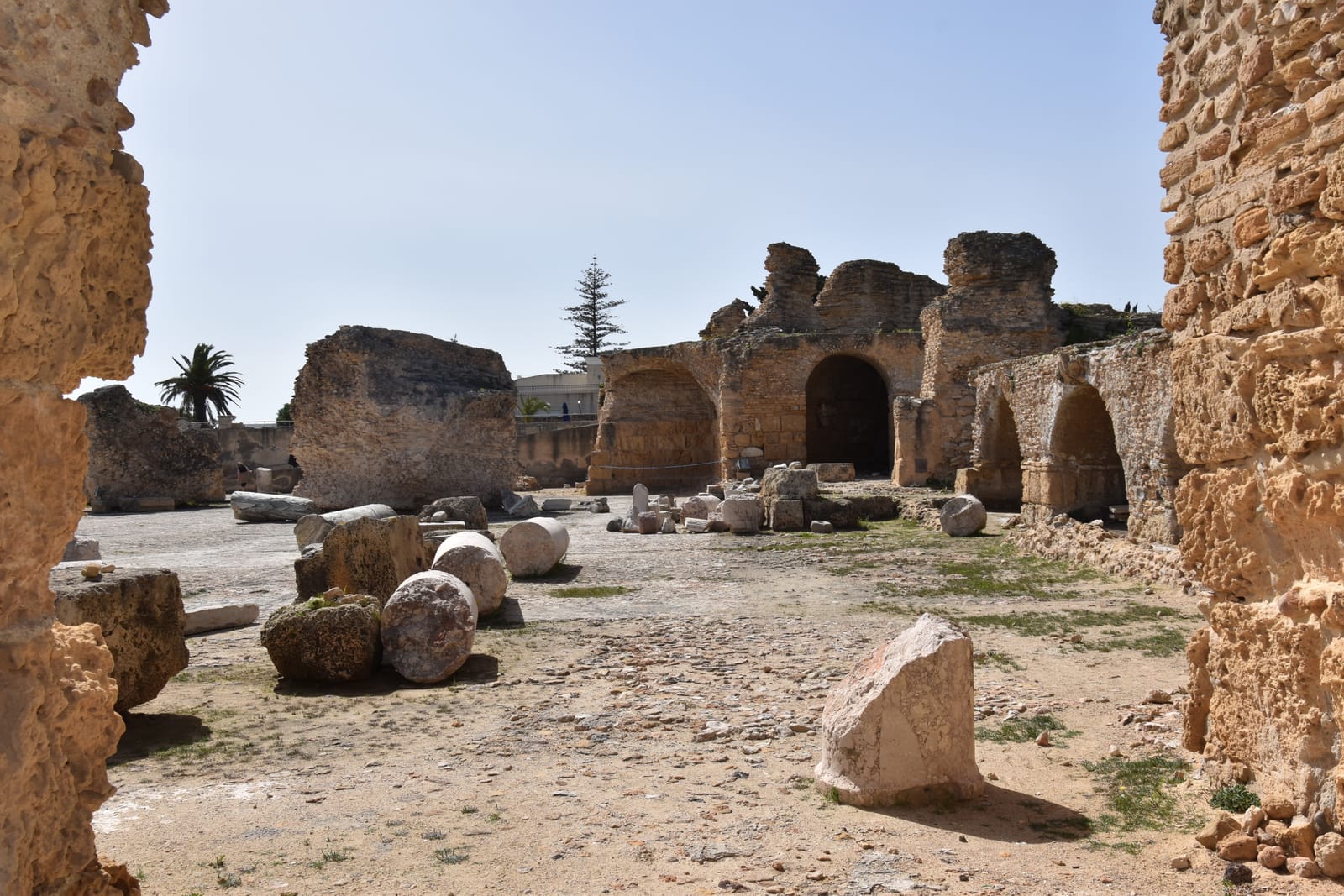
Do not expect a single dramatic ruin. Carthage is a landscape of fragments, and it rewards either a guide or some homework. With either, it is one of the great archaeological sites of the Mediterranean.
- Area: Half-day trips nearby
- Antonine Baths
- Byrsa Hill & museum
- Roman amphitheatre
Top things to do at Ancient Carthage
The Antonine Baths
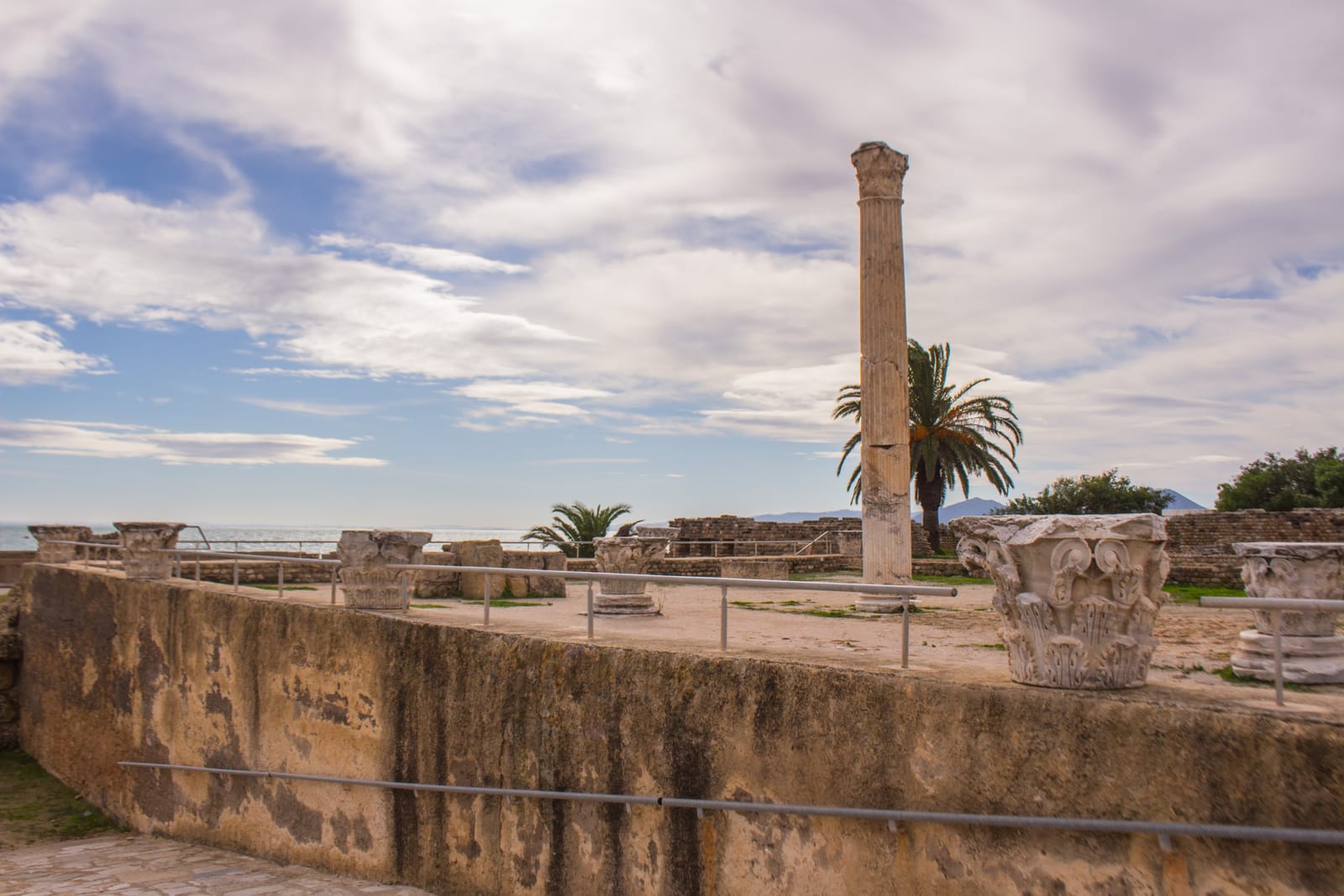
The largest Roman baths outside Rome itself, laid out on a terrace right above the sea. Only the basement level survives, but a single re-erected column shows the scale of what stood above — and the setting, with the water behind it, is unforgettable.
Byrsa Hill
The citadel hill at the centre of the Punic city, with the excavated Punic quarter, the national museum, and the best overview of how the whole site fits together. Start here if you want the story in order.
The Punic ports
Two small lagoons, now suburban and unassuming, that were once the rectangular commercial harbour and the circular military harbour capable of holding over two hundred warships. It takes some imagination, and it is worth it.
The amphitheatre and cisterns
The Roman amphitheatre, one of the largest in North Africa, and the vast La Malga cisterns that supplied the city via the Zaghouan aqueduct. Quieter than the main sites and usually empty.
How to get to Ancient Carthage
- By TGM: take the train from Sidi Bou Said towards Tunis and get off at Carthage Hannibal (for Byrsa and the ports) or Carthage Amilcar. The ride takes about five minutes and costs almost nothing.
- By taxi: five to ten minutes from Sidi Bou Said. Agree a price or insist on the meter.
- On a tour: most half- and full-day tours from Tunis combine Carthage with Sidi Bou Said, which solves the walking between sites.
Insider tips
- One combined ticket covers all the archaeological sites; keep it, you will be asked for it at each gate.
- The sites are spread over several kilometres. Pick two or three rather than trying to do all of them on foot.
- There is very little shade. Hat, water and an early start in summer.
- A guide genuinely changes this visit. Without one, the Punic ports in particular are just two ponds.
Ancient Carthage FAQs
Frequently asked questions
How do I get from Sidi Bou Said to Carthage?
The TGM light rail takes about five minutes — get off at Carthage Hannibal or Carthage Amilcar depending on which sites you want. A taxi takes under ten minutes, and most organised tours bundle the two together.
Is one ticket enough for all of Carthage?
Yes, a single combined ticket covers the archaeological sites including the Antonine Baths, Byrsa Hill, the amphitheatre and the villas. Hold on to it between sites.
How much time does Carthage need?
Two to three hours for the highlights (Antonine Baths plus Byrsa Hill), a full day if you want to walk the whole site including the ports, amphitheatre and cisterns.